Search This Blog

Monday, November 16, 2015

Skepticism and critical thinking in Oklahoma

Oklahoma seems to be known for a few things. Cattle, cowboys, tornadoes, OU, football, James Inhofe, Tom Coburn, Sally Kern, farmers, the bible belt, rodeos, meth labs, and country musicians. And did I mention the tornadoes and meth labs? (there's a movie idea. MethNado! starring Jodie Sweetin, Eddie Van Halen and Ted Haggard)  But we have something else in this state. We have some very good skeptics and critical thinkers.  Not too bad in a state that regularly is in the news for people doing some really weird shit because of magical thinking. We do have a few notable skeptics that I feel really need to be talked about and get more attention from the larger skeptical community. I can't mention everyone in the skeptical community here in Oklahoma, though I think everyone in all the skeptical, free thought, and critical thinking groups really do deserve more notice than they currently get. So, first of all, to everyone, thank you for fighting the good fight, and if I don't mention you, I am truly sorry. You all deserve more recognition for what you do. Unfortunately, I don't know you all personally, though I would really like to. So if you ever see me in public, come up and say hi. I haven't bitten anyone in weeks now. I am only going to talk a bit about the few I know personally, and hopefully get more people interested in what they do.

Dr. Bryan Farha:
Dr. Farha (better dressed fellow on the right)


Dr. Bryan Farha is the first skeptic I'm going to talk about. He is the professor and director of Applied Behavioral Studies/Counseling at Oklahoma City University (OCU). and slightly notorious with the psychic community. I met him originally when I asked him to come and speak to OSS about his books "Paranormal Claims: A Critical Analysis" and "Pseudoscience and Deception: The Smoke and Mirrors of Paranormal Claims", which you can buy on Amazon, and I highly recommend reading them. He has also written for The Huffington Post and Skeptic Magazine. I had been following his work for years and didn't realize it. He is also notorious for challenging the late Sylvia Browne concerning her acceptance of the James Randi Million Dollar Challenge. She had accepted the challenge, then back down, claiming there was no money. Dr Farha sent a certified letter to her showing the money. She still didn't respond, so when she appeared on the Larry King show, he called in, and he does admit he lied to get through the screeners. When he got to talk to her, he asked her why she still hadn't done the Challenge like she had said she was going to. You can read a bit more about it on Quackwatch.com. He is very personable and funny, and has been willing to help out or answer questions any time I've asked. He was also on a panel during Oklahoma's first skeptical conference. along with 2 other skeptics and 3 believers in various pseudoscience. He has probably been involved in the skeptical community longer than any of the others that I'm going to talk about, but he doesn't really have much of an online presence.

Dr. Caleb Lack:
Dr. Lack presenting at SkeptiOKcon

Dr. Caleb Lack is an author of quite a few books a blogger for the Skeptic Ink Network, and is also an Assistant Professor of Psychology and the Counseling Practicum Coordinator in the Department of Psychology at the University of Central Oklahoma (UCO), as well as the sponsor for the UCO Skeptics. I met him, much like Dr. Farha, when I asked him to come and speak at a Skeptics in the Pub for OSS. He is an excellent presenter and funny as hell. In terms of his books, Dr. Lack primarily writes about psychological issues and anxiety disorders. You can but them on Amazon as well. His books are written so even a layperson like myself can read them and understand what he is discussing. Dr. Lack has also been very active in the local skeptical community, presenting several talks on research concerning paranormal beliefs, hosting Oklahoma's first skeptical conference, SkeptiOKcon, handing out pamphlets in right before a psychic's show, doing interviews for podcasts, and attending several SiTP's. He also has a pretty good online presence. He has a website, www.caleblack.com, he's occasionally on Twitter @professorlack, and he has a public Facebook page . You can also read his blog, The Great Plains Skeptic on the Skeptic Ink Network, or watch him on YouTube, which has videos of some of his lectures. He has always been willing to give me a hand or answer a question, and has even gone out of his way to help with a certain project I was attempting.

The Blueball Skeptics:

The Blueball Skeptics is a podcast hosted by a couple of fellow Oklahomans, Damion Reinhardt and Chas Stewart. The don't put out a lot of episodes, but what they have are pretty good, including an interview with Caleb Lack and another with DJ Grothe. Personally, I think episodes 6&7 are their best to date. Damion and chas are both fairly active on Twitter, and you can follow them @D4M10N and @BirdTerrifier respectively. You can also follow the podcast @BlueBallSkeptic. Damion also writes for The Skeptic Ink Network under Background Probability. Damion has also given a presentation for OSS that ended up being titled "Listen to Data or people gonna die!" and I created an image for it:
                                 (Not too bad, if I say so myself)
I met both of these fellows at Dr. Lacks presentation for OKSS. They were funny, and very sharp. They can be a bit acerbic at times, but it's mostly meant in good humor. Like everyone else I've already mentioned in this post, I greatly enjoy getting to talk to these guys, and they've been a big help whenever I've had questions or needed help.

Beth, Collin, and Riley:
Finally, I have to mention the three most important skeptics in my life. My wife is the one that actually introduced me to the skeptical community, though at the time it was a misunderstanding on my part. (I know I've told the story already, but it's still funny) She told me about a little podcast called "The Skeptics Guide to the Universe". I thought it was a continuation of the "The Hitchhikers Guide to the Galaxy." I listened to them and realized that I wasn't the only person that thought the way I do, and was instantly hooked. Since then she has not only tolerated all my wild and crazy ideas, like starting a scientific skepticism organization in Oklahoma when everything else seemed to be more atheist based, doing the SiTP's, finding speakers, writing this blog, and joining 2 podcasts and starting one of our own (coming soon! Working Title is now "Those Blasted Skeptics!"), but she has actually encouraged me to continue, even when I get so frustrated or depressed (yes, I do deal with depression) that I just want to give up. She has been my base when I need a reality check, and the ice to my inferno when I get pissed about some BS woo that's cropped up. I've known her for nearly 20 years, and she has always been able to keep me in check, which she will probably admit, isn't easy. She is one of the main reasons that The Skeptical Okie even exists. My sons are also important skeptics in my life, though one of them is only a few months old. Collin, the older boy, has already debated with a Bigfoot believer, (ask Caleb if you follow him on Twitter), introduced me at an SiTP, and spoken a bit in front of the crowd. I believe that makes him officially the youngest person to speak at a Skeptics in the Pub. (Our SiTP events aren't held at an actual pub. I live in Oklahoma, so there aren't really such things as English pubs. Ours are held at a restaurant called Picasso Cafe in Oklahoma City) He also has a segment on the upcoming podcast called "5 minutes with Collin". He also encourages me to continue fighting the good fight, and actually reminds me to keep asking questions.

I hope that this demonstrates that Oklahoma doesn't have just the stereotypical gun toting, tobacco chewing, bible thumping, right wing rednecks.
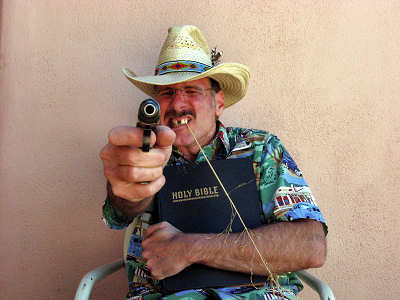
The skeptical community here in the land of crazy is actually surprisingly large and active. Many folks have been doing what we would now call skeptical activism for years. There are many very active critical thinkers that manage to combine the values of skepticism and the typical Oklahoma traits of compassion, helping one another, and alcohol. I mean good natured fun. Yes, we are a slightly unique breed of skeptic in Oklahoma, but we do our damndest to help make the world a better place for everyone. I really want everyone that reads this blog to look into what Bryan, Caleb, Damion, and Chas have been doing, follow them on the various social media, buy, or at least borrow their books, and give them some love.

Monday, November 9, 2015

If vaccines are so safe, why fear the willingly unvaccinated?

Okay folks, as seems to be the norm lately, this is going to be based on a Facebook meme that's been making the rounds, showing up in my feed several times a day, and royally pissing me off. This time I held off on making any comments, at least on-line. Especially after I read the comments. I am going to try and paint a picture for you. Imagine, there are 2 women, one wearing a red dress and pointing at the other, who seems mildly surprised. In the upper 1/3 of the image it says "Why would my unvaccinated kids be a threat to your vaccinated kids, if you are so sure vaccines work?" In the bottom 1/3 it says "NaturalNews" Yep. Fucking NaturalNews being used as a source of information to prove that vaccines don't really work. Or at least confirming certain peoples biases. Great. Bloody, flamin' great. I was very tempted to try and clarify that they do work, and have been shown to be effective, but I opted to read the comments first. Then I closed Facebook, got up, and contemplated slamming my head into a tree. Unfortunately, these sorts of sentiments aren't uncommon, though they aren't exactly rare either. The anti-vaccine movement has actually existed since Jenner gave the first smallpox vaccine, so roughly 219 years ago, as of 2015. Or you can go farther back to a process called variolation. There is a fascinating website called "History of vaccines" with an amazing timeline that you can see here. Because the history of vaccines is surprisingly long and detailed, and there is no way I could do it justice, I am not going to really get into it much. However, I am going to talk about how, much like the zombies from "The Walking Dead", we should fear the willingly unvaccinated.

Vaccines:

Lets start with a definition, shall we? A vaccine is, according to Dictionary.com, :  any preparation used as a preventive inoculation to confer immunity against a specific disease, usually employing an innocuous form of the disease agent, as killed or weakened bacteria or viruses, to stimulate antibody production.

There are also 2 main types of vaccines. The first is called a "Live Attenuated" vaccine. These are created by modifying a living virus into a form that is no longer as virulent. The second form is called an "Inactivated" vaccine. These are created by killing the virus, either by formaldehyde or heat. In either case, the main purpose of a vaccine is to cause a reaction in the body's immune system similar to the actual disease. This causes the creation of antibodies that will recognize the virus in the future and attack it. Neither type of vaccine will have any sort of an effect on bacteria. There are vaccines for most disease causing viruses, with a few notable exceptions. Ebola is one that has received a lot of attention in the past year, though they are fast tracking at least 1 viable vaccine. AIDS, of course, is another, though there is hope that one may developed soon. Vaccines have played an enormous role in not only protecting people from some pretty serious illnesses, but in expanding our life expectancy, reducing infant mortality, and improving our overall quality of life.

A brief look at the anti-vaccer arguments:
Lets take a quick look at some of the arguments that the anti-vaccination crowd often uses as their reasoning for what they believe.
A major talking point for the anti-vaccination crowd are the ingredients in vaccines, namely the MMR (Mumps, Measles, and Rubella). You will often hear them complain about the toxic materials in the shots such as formaldehyde, mercury, the virus itself, and Thimerosal ( a type of mercury). Funny thing is, in the MMR vaccine, it has never had Thimerosal. As a matter of fact, very few vaccines do, or ever have. The FDA has an interesting page on Thimerosal in vaccines, which you can look at here. I really recommend looking at it, it's pretty interesting, and it will give you some facts and figures on various vaccines. The reason that Thimerosal and mercury are the major issues is due to the Wakefield study, which claimed there was a link between autism and vaccinations. This line of thinking has been disproven dozens of times in independent studies, the paper retracted, Wakefield has lost his license to practice medicine because of how he performed the study and basically lying about the results. Yet many people will still claim it's the truth because it confirms their personally held beliefs.
Another argument that you might hear is "Too many, too soon".(I have also seen 2 many 2 soon and two many two soon.) The thinking behind this is that children today are getting too many vaccinations, which in turn leads to a toxic buildup of dangerous chemicals. Once again, wrong. The vaccination schedule is carefully considered by medical professionals before being recommended. I seriously doubt that they aren't going to hold their kids to the same schedule as everyone else. If they thought it was dangerous, they would recommend against it. Simple as that.
And yet another argument is that the diseases are mild, and nothing to be concerned about. This is not only wrong, but dangerous thinking. Measles, Mumps, and Rubella are all 3 dangerous diseases that can easily lead to multiple problems, including encephalitis, miscarriages, sterility in men, and even death. Ironically, Rubella infections while pregnant, may actually be responsible for some cases of autism. Much of this information, I found on the AntiAntiVax site, which has links to their sources. Anecdotally, I will also say that, as someone that has had the measles, I do not want to see anyone suffer through that.
Another oft repeated bit of drivel is that it wasn't vaccinations that reduced or eradicated diseases, it was sanitation. While it's true that sanitation has played a very important role in preventing or limiting the spread of various diseases, it is a minor player when compared to the effect that vaccinations have had. There are areas of the world where sanitation is limited, if not non-existent, and yet diseases are relatively kept in check by vaccinations. There have been multiple cases where the sanitation was adequate, and yet disease outbreaks kept happening. For an example of this, look up Typhoid Mary.A quick synopsis is: Typhoid Mary was a cook for several wealthy families. Generally speaking, the wealthy didn't suffer from many of the more communicable diseases. However, the people that Mary worked for kept catching Typhoid Fever. Turns out she was a carrier for the disease.
There are other arguments that crop up, such as "It's against God's will", and "They aren't natural" or "Diseases are a part of nature", and "They cause cancer" and so on. The ones I mentioned above are the primary Big Four that you will probably hear most often.

Why to fear the willingly unvaccinated
There are a few reasons why you should fear the unvaccinated. It's not because you think that unvaccinated kids might get your vaccinated kid sick. Nor is it because you have any doubts about the efficacy of vaccinations. These are horrible misrepresentations of the true reasons that people should, at the very least, be wary of the willingly unvaccinated. The first one is because of the people that are unable to be vaccinated. By this, I mean folks that are already immunocompromised, are allergic to an ingredient in the vaccine, or are too young to receive the vaccine. These people are at the greatest risk of contracting an illness. The very young, the very old, and the immunocompromised, are also at the greatest risk of dying from any of the vaccine preventable illnesses. All it takes is 1 person that is shedding a virus at a daycare to do some serious damage. There are also entire communities, such as the Amish, that could be wiped out by some of these diseases because, for the most part, they aren't vaccinated either. Their main form of protection is their isolation from society at large. I don't really approve of religious exemptions from vaccinations, but as a single person, there isn't much I can do.
A secondary reason to avoid the anti-vaccination crowd is that vaccines do on occasion fail. The failure rate for the MMR vaccine is roughly 2-5%. It's hard to get an exact figure because you don't know it failed until you're exposed and catch the illness. The CDC has some interesting information and figures here. Another reason that they might fail is because the target virus may have mutated or altered in an unforeseen way, such as the flu. While the vaccination may not completely stop you from catching the disease, it can still help mitigate the effects and make it less transmissible to other people. Vaccines may also fail if they are improperly made, if the virus is already established in the bodies cells, and on occasion the maternal antibodies will interfere with the vaccination. Also, there is a slight chance that the vaccine may have become denatured either during storage, or during administration. Even given the reasons a vaccine might fail, the odds are still in your favor if you go ahead and get it.
Finally, there are a couple of little things called The Germ Theory of Disease and Fomite Transmission! As you should hopefully know, the germ theory explains that diseases are caused by microorganisms. Fomite transmission is where a disease is transferred by contaminated equipment, clothing, or any other inanimate object. Anyone, vaccinated or not, can accidentally carry a virus from one location to another. That's one of the things that makes the flu such a bitch for the medical community to try and keep it under control. That, and the fact it changes faster than a politician during an election year. While most viruses can be transferred from location to location, each type has a different habitat in the human body. Some will live in mucus, other in the saliva, and yet others in various bodily fluids. They also have differing amounts of time that they can survive outside of the host body, ranging from mere minutes to years. As you can probably imagine, the unvaccinated crowd will probably have a higher virus load on their clothing and skin, which means that they will have a higher chance of infecting people that they come into contact with.

Conclusion:
I could have easily gone into the increase in deaths from vaccine preventable illnesses, the idea of community (or herd) immunity, talk about the diseases eliminated by vaccines (rinderpest and smallpox and almost polio), the problems with religious and personal belief exemptions to vaccinations, or even discuss the Wakefield study and why it was found to be full of errors and misrepresentations. Those have all been done repeatedly by folks that are much more intelligent and better writers than I could ever hope to be. Instead, I've opted to be blunt and say simply fear people that will willingly avoid getting themselves and their children vaccinated. And pity them for their overwhelming fear and mistrust.

Tuesday, November 3, 2015

Why we can't win.

I normally label articles like this as being an opinion piece. This time I'm not, because it's not really just my opinion. It is unfortunately a fact of life for the critical thinking/scientific skepticism communities, and I believe most of us have known this for years.


I have recently began responding more often to various pseudoscientific and blatantly false claims, such as one I've seen a couple of times recently. (I've been doing this partly because bad information aggravates the hell out of me, and partly because I want people to be able to look at all the information without any sort of fear mongering and come to a conclusion based on the data.)  This one in particular reads: "The FDA has changed the name of aspartame to AminoSweet!" First of all, the FDA doesn't name products, they only give guidelines on the labeling. As well, it was one company that is based in Japan that is changing the name, not every manufacturer on the planet. I pointed these two facts out, simply trying to point out the post was false, and try and give anyone that actually reads the comments a starting point to find the real information. Shortly after, the original poster came back with a comment that stated the FDA still allows poisons to be put into our food, and aspertame is a neurotoxin according to FDA investigator Arthur Evangelista (who is a former FDA investigator) I have written about aspartame before, and I am passingly familiar with some of the claims that folks make about it. Especially the neurotoxin claim. I pointed out that water and oxygen, when applied directly to a neuron, will act like a neurotoxin, killing it. The someone else asked to see water and oxygen tumors and posted pictures of the rats used in the highly flawed Seralini GMO/RoundUp study. I asked him what genetic line the rats came from, and he said GM Corn. WHAT THE HONEST FUCK!?! I asked about the rats and he says GM Corn? I pointed out that the genetic line of rats used in research are going to affect the way the study turns out. If they had used rats designed for diabetic research, the study would have shown drinking RoundUp causes diabetes. "Sorry Mr. Brimley, your diabetes wasn't a genetic issue. You shouldn't have been drinking RoundUp and eating GMOs while filming Cocoon." I pointed out the study that he has decided to use to refute aspartame was highly flawed. I did make an error here and not point out it had nothing to do with the original statement. I was just so surprised by it, and I was in full "learning moment" mode that I tried to show how that was wrong as well. Luckily, there was another member of Oklahoma Skeptics Society reading the thread, and he had good info that he added to the discussion. It basically ended with several statements that I've heard way too often lately concerning a surprisingly wide variety of topics, and I'm going to address them. Unfortunately, these statements demonstrate why critical thought will never completely prevail over superstitious thinking and bad information.

Before I go any farther, I have to mention that this is only the most recent example of a common trend that I have been seeing for a long time. 

Scientific Consensus

The first was "Why is it when a "scientist" (I added the quotes because they are rarely dependable or reliable scientists) has a finding that isn't part of the consensus, he's labeled a fear monger?" The simple answer is....because they are. If you have 1 scientist that reports a finding saying a common food or medical treatment is dangerous, sends out press releases before peer review, and they promote their findings, (and alternative products on occasion) and they claim it has very extreme effects, and no other group can reproduce it in any meaningful way, then yes, they are trying to scare people away from something that, at the least isn't harmful and at best is highly beneficial. This is the definition of a fear mongerer. The reason that there is a scientific consensus is because the findings are relatively consistent and can more than likely be trusted as fact. Granted, I am not really a fan of Monsanto, mostly due to their legal practices, but I fully believe that GM products are going to be the major contributor to feeding the planets growing population, especially with climate change altering growing cycles. But once again, the Seralini study had nothing to do with the initial conversation, it was a weird combination of the Gish Gallop and Moving the Goalpost. This entire tactic (invoking bad studies, wild claims about the dangers, and the Gish Gallop Goalpost) are often used by climate change deniers, the anti-vaccine crowd, anti-GMO advocates, creationists, and many other proponents of pseudoscience. Especially the ones that either have some sort of religious or political spin to them. They also tied in a conspiracy theory saying Monsanto is covering up any negative studies. Once again, way the hell off the original topic, which was misinformation about a products name change. Plus I doubt Monsanto has bought off 99% of the agricultural and food scientists. But people that rely on the "rebel scientists" are generally very distrustful of any sort of large establishment, such as governments and international companies. They tend to feel that governments and governmental agencies, such as the FBI, the CIA, the NIH, the FDA, the CDC, and the NWO (I had to throw that one in because a lot of these people believe there is an evil global conspiracy), as well as large companies, will lie and mislead the public for some nefarious purpose. They will think that the one person that works outside of the system and finds something no one else ever has is the only one telling the truth, and if you dispute the claim of the person, you will often be called a shill, a sheeple (damn I really hate that word), or naive. They will also tell you you need to open your eyes and do research. Which happened during the course of the original thread. When I said I do research things, and that is why I wanted to know what genetic line the rats were, and what the protocols used for his study were (which I already knew), the other person quit replying. I have to wonder if he went and actually looked into it a little deeper from sources other than NaturalNews and Mercola, or if he rage quit. My money is on rage quit.

Why do you care what we do?
Another statement that was made during the discourse, and I am paraphrasing, was  "Why does it matter if we don't want to eat this stuff? Why do you care what we do? Everyone should be allowed to keep things out their bodies they don't want!" I agree wholeheartedly! If you want to avoid consuming something, by all means, do it. More for me. Especially you have a legitimate reason for avoiding them. Say you have PKU, then yes, you have to avoid aspartame, and for good reason. But just because you're scared of something after visiting some Woo Woo sites, you really shouldn't be posting misleading and false statements purposely designed to scare people into doing the same. The original post was created specifically to invoke a fear response from people that are already wary of big companies, chemicals, and the government. It was set up as a warning that the scary gubberment is letting Big Chemical try and sneak one past the unsuspecting and gullible people. These damn things are the meme equivalent of the guy on the corner with the sign that claims the world is ending soon. They are false, there is no evidence, they often smell a bit funny, they get creepy after a while and seem to follow you around the internet.

I won't believe your "Science"
You want to piss me off, say "You can show me all the studies and science, and I'm still going to believe what I want." This is basically the last thing that was said in the thread, outside of being accused of starting a fight, and me reiterating my initial position (and I actually received a sort of, almost apology) These anti-science sentiments have been getting more and more vocal in the past few years. When you say this, basically what I hear you saying is "I don't care how reality works, I'm going to make up my own thing so I can feel comfortable and justify my life choices to myself."  This sort of thinking is the cause of so many problems when it comes to the results from research. Some people won't believe any research unless it jives with their previously held beliefs. Then, anything that disproves that is part of some huge corporate/governmental/military cabal bent on global domination and the complete subjugation of the population. And yes, it does escalate that quickly. The most aggravating part of this type of thinking is that the more evidence you provide, the more that people will dig in and hang on to their beliefs. This is called The BackFire Effect and you can read more about it on The Skeptics Dictionary. These are the type of people that, as critical thinkers, skeptics, humanists, and scientifically literate people, we need to convince the most to look at all the information. Yet, and let's be honest with ourselves, we know that nothing we do will convince them to look at other evidence. You can try and convince them, but as soon as you push a little too hard, suddenly you're a bully, you're hassling them, you're blinded to the truth, etc. If someone presents me with evidence that is contrary to what I feel is a fact, admittedly my first response is to dismiss it. But then I realize that my personal bias' have kicked in, and I will look at their evidence and try to keep an open mind. And my opinion has been changed by doing this. I have rarely seen anyone from the pseudoscience side of things do the same. (And they call skeptics close-minded?)

Conclusion
The best way to deal with a fight you can't win is normally to just walk away before the damage is irreparable. However, we just can't do that here. As several other people have pointed out in the past, skepticism in the intersection of scientific literacy and consumer protection.


We can't just say "Screw you guys! I'm going home!" We have to continue the good fight and yes, it is a battle on multiple fronts with various opponents using different tactics. (And yes, I know that the phrasing I'm choosing makes skepticism sound fairly combative, but when peoples lives are at risk, then yes, it is a fight.) Instead of focusing our time and energy on the hardcore, full tilt woo woo bullshit believers that we know are never going to change, let's focus more on the fence sitters and the general public. Let's try and provide good information that people can look into and come to an informed decision themselves. It may not always be the right decision, but at least they will be using all the available information. As a whole, people are sensible, rational creatures that do respond well to facts, and when presented with all the available information, generally they will make an informed choice, politics not included. We also need to work harder to inform the general population on what makes a study good or bad, how to read a scientific paper, and how to properly interpret data for themselves instead of relying on others to do it for them. (Remember when only the clergy could read the bible and the congregations had to rely on the priest to tell them what it meant?)  We also need to show people how to distinguish blatant propaganda and scare tactics from factual information. This is why critical thinking and scientific literacy need to be core classes in elementary schools. Until then we will always be dealing with James Randi's "Unsinkable Rubber Duckies"
  
 I didn't reply to the initial Facebook post to be a self righteous dick. I simply intended to put accurate information out to help people make an informed decision. Of course, by the end, I seemed to be the bad guy for attacking their beliefs, though that was never my intention. I just have an issue when people seem to rely on Facebook memes to make decisions concerning their health and nutrition.

Recent Podcast appearance!
This isn't related to the topic but I really wanted to promote it. I am a contributor on a podcast called the Unseen Podcast. It is primarily devoted to astronomy, astrobiology, and space exploration (I have no idea why they let me on, but they did) We recently did our Halloween episode, and I was the host. We had: C-Webb from The Paranormal Skeptic Academy podcast, David Flora from the Blurry Photos podcast, Mike Bohler from The Skeptics Guide to Conspiracy (and he's also a regular contributor on Unseen), and Paul Carr, the main host, and Marsha Barnhart as panelists. We spoke about cryptids, conspiracy theories, evidence, UFOs, played the drinking came created by yours truly, and got really damn silly. If you've ever wondered what I sound like, are a fan of C-Webb, Blurry Photos, or Mike Bohler, you should really check it out. You can find The Unseen Podcast Episode 31 here! Thanks for reading, and hopefully listening to the episode. I am hoping to start my own skeptical podcast, with my wife and son as co-hosts, in the next couple of weeks, though I will still be a regular contributor to both the WOW! Signal podcast and the Unseen Podcast.


Monday, October 26, 2015

What's the worst that could happen? How about death?

How's it going folks? If you've been involved in the skeptical community for any length of time, you'll notice a phrase repeated fairly often. When talking to proponents of almost any form of pseudoscience, at some point, you'll hear them say something along the lines of "What's the worst that could happen?" To be blunt, the worst thing that can happen is almost always death or financial ruin. Everyone can point out the dangers of the anti-vaccer movement and the alt-med crowd. But many other forms of pseudoscience can have dangerous results.

Many people feel that a belief in cryptids is a bit of harmless fun, and can be entertaining. Most of the time, this is true. However, some people have sunk large amounts of money into the search for these supposed unknown creatures. They buy the latest and greatest pieces of equipment (that they don't always fully understand how to use properly), rent or buy land that they feel have the creatures living there, buy books, movies, go to lectures, and otherwise spend their hard earned money. Granted, it's not normally as bad as other forms of pseudoscience, but there is still a lot of money changing hands. There are also injuries and deaths associated with cryptids, especially Bigfoot. From CNN.com, there is the story of the poor man that was trying to hoax people with a Bigfoot costume and was hit by a car and killed. From HuffPo comes a story out of Oklahoma. A man was shot during a Bigfoot hunt, and 3 people were arrested.  Of course, they have been a great many injuries suffered by folks looking for various cryptids. Falls, burns, cuts, scrapes, broken bones, and so on, though these are also injuries that anyone can get while hiking and camping, so they aren't really unusual.

Ghosts are another flavor of pseudoscience that is often thought of as being safe and harmless. Much like the cryptid hunters, they tend to buy a lot of equipment (that, once again, they don't often know how to use). They also buy books, go to lectures, and travel long distances to visit supposedly haunted locations. And much like looking for cryptids, it can be dangerous. They often go into dilapidated buildings, run around in the dark, and generally scare the hell out of themselves. From CNN.com, there is a story of a group of ghost hunters investigating a 119 year old train crash and 2 were killed. From WeekInWeird.com comes the story of a group of ghost hunters that burnt down a historic plantation in Louisiana. There are a lot of stories of ghost hunters being shot at, injured, or killed on a site called Theoccultsection.com.

Going to a psychic or a medium is just a bit of harmless fun, right? Not quite. There are dozens of stories about so-called psychics being arrested for fraud. On HuffPo, there are several links to stories of these folks being arrested. From the NYPost site, they have a story of a man being taken for $700k after his girlfriend died. And yet another story from the Skeptics Guide of a poor fellow being taken for a lot of money to remove a "love curse". When it comes to bodily harm and death caused by people going to a psychics instead of an actual medical professional, the CDC and the WHO don't really keep records. However, there are quite a few stories about folks being injured because they heeded the advice of a psychic. The problem with trying to Google these events is that they get buried under dozens of positive results concerning these hucksters. Most skeptical websites, such as Sciencebasedmedicine.org and the Neruologica Blog, will have stories about people being hurt by psychic advise.

Of course, there is the anti-vaccination group. These are the people that will claim that vaccinations can cause autism, cancer, neurological damage, and pretty much any other sort of illness you can imagine. The people that promote the anti-vaccination message are normally the same people that push all the varieties of alt-med B.S. There can be a financial deficit from believing the anti-vaccers, mostly from trying to treat an easily preventable disease. This is definitely a case of an ounce of prevention is worth a pound of cure. The treatments of  preventable diseases are normally many times more expensive than the vaccinations. From the CDC, there are a lot of numbers concerning people being hospitalized or dying for vaccine preventable diseases. Of course, there is the infamous Jenny McCarthy Body Count site. You can also look at the World Health Organization (WHO) and the National Institute of Health (NIH) for even more numbers. This is one of the most dangerous forms of pseudoscience that is out there. Not only is it dangerous to the people that practice it, but it is actually dangerous to everyone around them, especially the very young, the old, and the immuno-compromised.

And of course there is homeopathy, naturopathy, acupuncture, crystal healing, and other alt-med treatments. There are so many stories of people spending their life savings on alt-med treatments that I'm not even going to try and link to the stories. There are also a ton of stories that demonstrate the physical dangers of trusting in these quacks. What a lot of these alt-med practitioners either won't tell you or they don't know is that there can be dangerous drug interactions between actual medicine and their so-called treatments. On Tim Farley's What's the Harm site, he lists not only the number of people that have either died or been injured by naturopathy, but also has economic damage listed for naturopathy, homeopathy, acupuncture, and other pseudosciences.

As I said in the beginning, the simple answer to "What's the worst that could happen?" is death. It's almost always death. Putting your trust in any sort of pseudoscience, especially when it comes to a persons health, is a dangerous proposition. I know that anything I write or say is not going to convince the hard core true believers. But hopefully, if anyone is undecided, some of this will at least get you to do a bit of research yourself. And also make sure that you validate the sites you're looking at. There are a lot of them that are just fear mongering sites. They have their own products they are trying to sell, and will attempt to scare you away from actual science in order to make a few bucks. Even though they aren't infallible, the CDC and the WHO are trustworthy sources. They have no financial gains from saying something does or doesn't work. They are simply trying to get the best and most accurate information out there.


Wednesday, October 21, 2015

Essential Oils cure everything? Only if it stinks.

Ok folks, it's time for another post about something that has been increasing in popularity over the last few years. I have been seeing more and more posts and articles about the healing power of essential oils. I've heard people say that they can help with everything from asthma and sleep apnea to helping with skin conditions and curing cancer. As the hosts of the Sawbones Podcast say, cure-alls cure nothing.So, as usual, I'll start with what essential oils actually are. I am going to say now that the research for this topic was not easy. Almost every search result took me to a lot of naturopathic and alt-med websites. I had to sort through a bunch of bullshit to try and find even a kernel of unbiased truth. There is a lot of misinformation or mis-interpretation in a lot of alt-med, and essential oils are no different.

What are essential oils?:

From the Merriam-Webster dictionary, essential oils are defined as:

an oil that comes from a plant, that smells like the plant it comes from, and that is used in perfumes and flavorings

Essential oils are volatile compounds that quickly disperse throughout the medium they are used in. They are the basic component of most air fresheners, colognes and perfumes, and are very useful in baking. They are normally produced by extracting and concentrating the oils of various plants. Almost every plant has an oil component which can be extracted. As I said, some of these, such as peppermint oil, are useful in cooking and baking as they greatly enhance the flavor of the item. They a large part of any sort of odor based item you use everyday, and they are the major component of aromatherapy.

History:

The history of essential oils most likely dates back to before recorded history. Various oils have always been used to eliminate foul odors and to prepare bodies for burial, cremation, or for mummification. Of course, they have been used as a means of protecting health or even curing various illnesses.  According to an article on crucible.org, they are one of the oldest forms of medicine known to man. And this is correct, but if you continue reading the article, it quickly devolves into a Woo fest, talking about vibrations, energies, frequencies, and Egyptian mythology. So basically, it becomes a bunch of gibberish. And this is a main problem with researching this sort of thing. You find a bunch of crap with a few nuggets of truth. Of course, I looked to Wikipedia for more history on this topic. According to them, though they have been used all through human history, the earliest written record of how to produce them was from roughly the early 13th century. And that was about it. To be honest, I have not been able to find any dependable information on the full history of essential oils. Most of them start out being sensible, and then quickly dive deep into the quack pool. 

Uses:
Actual uses:
There are honest, legitimate uses for essential oils. The most obvious are are air fresheners, colognes, and perfumes. Essential oils are what give most of these their distinct aromas. Because memory is strongly linked to the sense of smell, they can invoke a variety of memories, ranging from happy and pleasant to remembrances of sad or terrifying events. This might be part of why fans of aromatherapy believe them to have a curative effect. 
Essential oils are are beneficial to bakers and cooks. They are used to improve the flavor of a variety of foods such as cookies and cakes to roasts and vegetables. Vanilla and peppermint are probably 2 of the most popular flavors commonly used in the culinary arts.
There might be evidence that there are actual medical uses for essential oils. In a recent article in The Atlantic, they might be able to function as an antibiotic. If these initial studies pan out, then we might have a weapon against antibiotic resistant bacteria. This still has to be more fully evaluated, and the results reviewed. Of course, this is nowhere near what the alt-med folks claim that they can do.
Alt-med uses:
Proponents of essential oils make a variety of claims as to what they can do. The claims, for the most part, are completely unsubstantiated. The alt-med crowd will often say that essential oils can be used for respiratory problems, skin problems, cancer, and pretty much any other ailment that you might have. If you go to (and I really flamin' hate using this jackass as a reference!) Mercola.com and look up essential oils, he seems to have a fairly comprehensive list of essential oils and there supposed uses. Of course, like so many other claims made by Mercola, these are pretty much unproven at best and completely disproven or dangerous at worst. I have even heard of uses for essential oils in veterinary medicine. I know this is an anecdote, but unfortunately it's not the only time I have heard of people doing similar things. During the course of my day job, I occasionally interact with different veterinarians. During one visit, they had a litter of puppies that were diagnosed with parvo, which is a dangerous disease in dogs. A client came in, saw the sickly pups and informed the vet that she knew what would cure them. She told the vet to rub oregano oil on the stomachs of the pups and they'd be fine. I seriously doubt that rubbing oregano oil on the stomach for a virus is going to have any sort of an affect.

Evidence
Now comes the fun part of the research for essential oils. Trying to determine if there is any evidence for the efficacy of their use. I found a website called childrensMD (here, MD stands for Mom Docs, not Medical Doctor and no way in hell am I going to link to them) that starts with an anecdote of a Harvard lawyer being at an essential oils party and promoting the products. They seem to think that a lawyer is going to have an understanding of basic science and medicine. Granted, she went to Harvard, but not to the medical school.Just because someone is highly educated doesn't mean that they are going to have any knowledge in areas outside of their expertise. Not a lot of research here. Looking through PubMeds, the NIH, and the CDC, the most I've been able to find is that there are preliminary studies that show they might be useful as an antimicrobial treatment. Nowhere could I find anything that shows essential oils are useful for treating asthma, sleep apnea, cancer, or most skin conditions. As with most alt-med claims, these can be dangerous, because people will think that they are treating an illness, and forgo actual medical treatment. They will often use The Argument from Antiquity, saying that because essential oils were often used by many ancient cultures that there must be a benefit to using them. They often ignore the fact that in the old texts, different cultures recommended different oils for the same thing. As a matter of fact, the same oils would often be used for exactly opposite conditions in different cultures. They also will use the Naturalistic Fallacy and claim that because the oils are all natural, refined, and purified, they are automatically good for you. (Arsenic, uranium, and meteors are all natural too) Trying to find dependable information requires quite a bit of digging, and a bit of scientific literacy. If you just go off of the first few hits on Google, then all your information is going to come from sites like NaturalNews, Mercola, NaturalMomma, and other New Age/spiritualism/alt-med pages.

Dangers:
Like most of the alternative medicine modalities, there is a risk of people not using conventional medical treatment and instead using the "all natural, no chemical (major misnomer there) , no side effects etc.." treatments. Which in turn can cause a minor, easily treated illness become a major, life threatening one. Unlike Woo based medicines like homeopathy, there can be very serious side effects from these oils, and some of them are just flat out dangerous if not used properly. Some of them interact poorly with medicines, and can even cause some severe side effects. Even inhaling some of them can cause the lungs to become more permeable to substances like nicotine or cause a drug interaction. If they are used on the skin, they can be absorbed and cause drug interactions with heart medications and a few anti-psychotics, and other prescription medications. On WebMD, they report that citrus based essential oils can cause phototoxicity and that some practitioners develop a contact allergy. Severe allergic reactions have been known to occur. Anecdotally, I suffer from an allergy to cinnamon, which can be an essential oil that is used in quite a few treatments. When my skin is even lightly exposed to cinnamon, I break out in hives. If an aromatherapist were to try one of these treatments on me, I would have a severe reaction which would cause me a good bit of pain. If essential oils are used directly on a baby or people with sensitive skin, they can cause chemical burns to the skin. Also, if a baby inhales essential oils, especially for extended periods of time, they can cause respiratory problems.

Conclusion:
Essential oils, while smelling nice, helping to improve the taste of foods, and possibly being able to prevent or at least mitigate bacterial infections, really don't have a lot going for them when it comes to a persons health. They don't cure cancer, won't help with most skin conditions, and may actually cause skin irritation. They can be dangerous to the very young, cause severe and dangerous drug interactions, and have very little science or facts to back the claims that are made about their properties. The Argument from Antiquity and the Naturalistic Fallacy are not proof  for any type of medical treatment. There needs to be well controlled, testable, and repeatable studies done before anything can be said to be an effective treatment for anything. So, if you have an illness or condition, go and see an actual MD (Medical Doctor). Otherwise, you may just end up leaving a pleasant smelling corpse.

Please feel free to leave a comment.